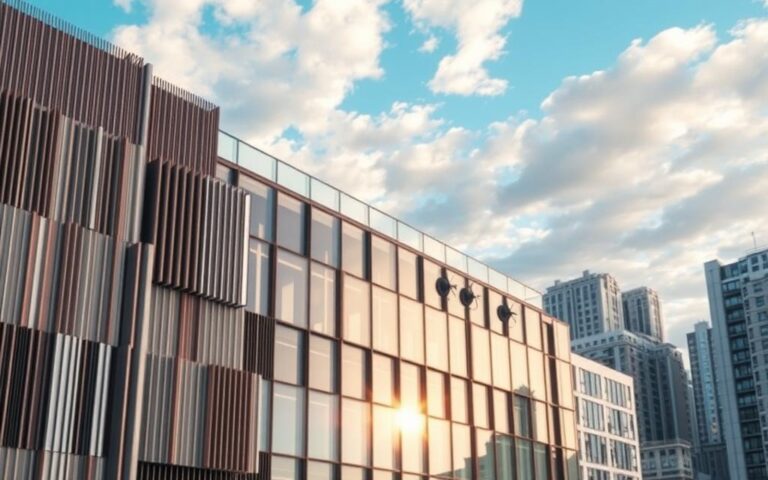
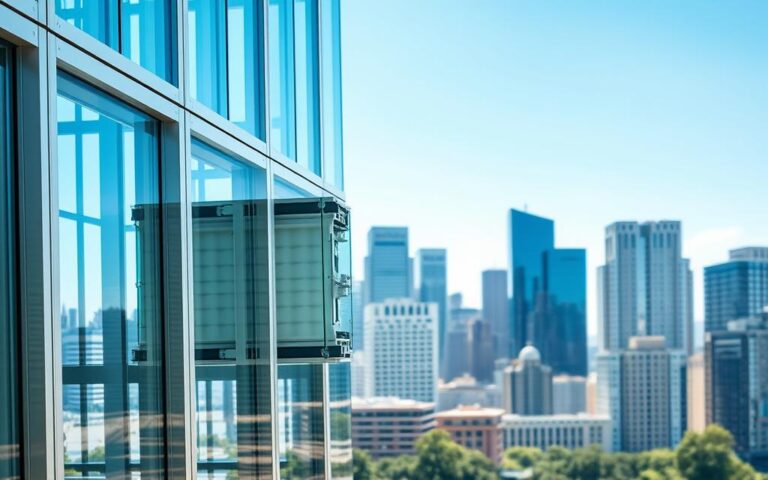
Buildings are evolving to be more sustainable, and one area where innovation is flourishing is in rainwater management systems integrated into facades. These innovative facade systems for efficient rainwater management allow for the collection and management of rainwater, providing numerous benefits for the environment and building owners. By merging sustainability with cutting-edge design, these facade systems are transforming the way buildings are constructed and operated.
Sustainable building facades that incorporate rainwater harvesting have become a key aspect of green building solutions. These efficient facade designs focus on minimizing water waste and maximizing water conservation. Incorporating rainwater harvesting technologies into facades enables buildings to reduce their reliance on municipal water supplies and embrace eco-friendly rainwater systems.
The Evolution of Building Exteriors: From Aesthetics to Rainwater Harvesting
The integration of rainwater harvesting into building exteriors is a response to the growing need for sustainable architecture practices. This innovative approach represents a shift in focus from purely aesthetic considerations to the incorporation of ancient techniques for modern sustainability. By drawing inspiration from historical contexts, architects and engineers have developed facade systems that seamlessly integrate rainwater management, addressing modern challenges in water conservation and sustainability.
Historical Context of Rainwater Harvesting in Architecture
Ancient civilizations recognized the value of rainwater harvesting and incorporated it into the design and construction of their architectures. Civilizations such as Mesopotamia, Egypt, and Rome implemented innovative techniques to capture and store rainwater. These techniques allowed them to ensure a stable water supply, particularly in arid regions where water scarcity was a significant concern. Over time, however, the proliferation of centralized water systems diminished the practice of rainwater harvesting.
Reviving Ancient Techniques for Modern Sustainability
In recent years, the revival of interest in ancient rainwater harvesting techniques has become a pillar of sustainable architecture practices. Architects and engineers are seeking to leverage the knowledge and wisdom of past civilizations to develop innovative facade systems that integrate rainwater management into building exteriors. By drawing from historical contexts, modern practitioners are able to harness the ancient techniques and adapt them to meet the challenges of contemporary water scarcity and sustainability.
Reviving these ancient techniques not only provides a practical solution for modern challenges but also serves as a testament to the enduring wisdom and resourcefulness of ancient civilizations. Furthermore, this approach aligns with the broader goal of sustainable development and emphasizes the importance of looking to the past to inform and guide our present and future architectural endeavors.
Innovative Facade Systems for Efficient Rainwater Management

Modern facade systems are being designed with the specific purpose of efficiently managing rainwater. These innovative systems incorporate features such as specially designed panels or cladding materials that capture rainwater runoff and channel it through a network of gutters and pipes integrated within the facade. The collected rainwater is then filtered and stored for non-potable applications, such as toilet flushing or irrigation. These facade systems are at the forefront of sustainable water management strategies, allowing buildings to conserve water resources and minimize their reliance on municipal supplies.
Advanced facade design plays a critical role in facilitating efficient rainwater management. These facade rainwater management technologies effectively collect and store rainwater, enabling sustainable water management strategies within buildings. By integrating innovative facade systems, buildings can contribute to water conservation efforts and reduce their environmental impact.
Sustainable building solutions that incorporate cutting-edge rainwater management systems provide a range of benefits. First and foremost, these systems help to conserve water resources by capturing and utilizing rainwater for non-potable applications. By reducing reliance on municipal water supplies, buildings can contribute to sustainable water management strategies and minimize the strain on existing water infrastructure.
Furthermore, innovative facade systems offer advanced rainwater collection and storage capabilities. Specially designed panels and cladding materials efficiently capture rainwater runoff, preventing it from being wasted and instead diverting it to storage tanks or reservoirs. This enables buildings to have a reliable source of water for various non-potable uses, reducing the need for additional water supply.
By implementing sustainable water management strategies through advanced facade design, buildings can also optimize their water use and contribute to overall water conservation efforts. These systems enable more efficient water distribution and usage, ensuring that water resources are utilized in a strategic and sustainable manner. This not only benefits the environment but also reduces utility costs for building owners, making sustainable water management an economically attractive solution.
In summary, innovative facade systems for efficient rainwater management provide sustainable water management strategies, allowing buildings to conserve water resources, minimize reliance on municipal supplies, and reduce their environmental impact. By integrating cutting-edge rainwater management technologies into facade design, buildings can contribute to water conservation efforts and create a more sustainable future.
Key Benefits of Integrating Rainwater Management into Facades
Integrating rainwater management into facades offers numerous benefits for building owners and the environment alike. These innovative systems provide sustainable solutions for conserving municipal water resources, reducing utility costs, and addressing urban stormwater runoff challenges.
Conservation of Municipal Water Resources
One of the key benefits of integrating rainwater management into facades is the conservation of municipal water resources. By collecting and storing rainwater for non-consumptive uses, such as irrigation or toilet flushing, buildings can significantly reduce their reliance on potable water. This reduction in demand helps to alleviate the strain on municipal water supplies, ensuring a more sustainable and efficient use of this valuable resource.
Financial Incentives and Reduced Utility Costs
In addition to water conservation, there are financial incentives associated with rainwater management. Building owners who implement these facade systems can benefit from reduced utility costs by relying less on costly municipal water supplies. The financial savings resulting from lower water consumption can contribute to overall cost savings and provide an attractive return on investment for building owners.
Alleviating Urban Stormwater Runoff Challenges
Urban areas face significant challenges with stormwater runoff, which can overwhelm drainage infrastructure and contribute to flooding. Integrating rainwater management into facades helps alleviate these challenges by effectively capturing and storing rainwater on-site. By preventing excessive stormwater runoff, these facade systems contribute to a more resilient and sustainable urban environment.
Overall, integrating rainwater management into facades provides a range of environmental, economic, and social benefits. From conserving municipal water resources to reducing utility costs and alleviating urban stormwater runoff challenges, these innovative facade systems play a crucial role in sustainable water management and building design.
Exploring the Aquatecture Panel System

The Aquatecture panel system is an innovative rainwater harvesting facade system that offers efficient rainwater collection in urban environments. These modular stainless-steel panels are specifically designed to capture rainwater effectively, making them ideal for densely populated areas where space is limited. The Aquatecture panels can be seamlessly integrated into existing building facades or used as freestanding water-harvesting stations, providing flexibility in design and application.
One of the practical applications of the Aquatecture panel system is rainwater collection for non-potable uses such as irrigation or toilet flushing. By incorporating these panels into building facades, rainwater can be harvested and stored for on-site use, reducing the need for traditional water sources and minimizing water consumption. This not only conserves water resources but also contributes to the overall sustainability of urban environments.
Furthermore, the Aquatecture panel system offers sustainability advantages that contribute to sustainable urban development. By managing stormwater runoff through rainwater collection, these panels help alleviate the strain on drainage infrastructure during heavy rainfall events, reducing the risk of urban flooding. Additionally, the use of the Aquatecture panel system promotes a more eco-friendly and resource-efficient approach to water management in urban areas.
The Aquatecture panel system represents an innovative solution to rainwater collection in urban environments, providing practical applications for sustainable water management. With its efficient design and sustainability advantages, this facade system serves as an excellent example of how innovative rainwater collection technologies can contribute to urban water management solutions and support sustainable urban development.
Driving Factors Behind the Adoption of Efficient Facade Design
The adoption of efficient facade design, including rainwater management systems, is driven by several key factors. These include the growing environmental consciousness and the desire among building owners to incorporate sustainable practices into their designs. Additionally, regulatory requirements and the need to comply with energy and water efficiency standards play a role in driving the adoption of efficient facade design. Furthermore, the need to mitigate the impacts of climate change and the desire to stay on the cutting edge of building industry innovations also contribute to the adoption of efficient facade design.
In response to the sustainable building trends and environmental consciousness, architects and developers are increasingly seeking innovative solutions to create energy-efficient and water-efficient building designs. These designs not only minimize the environmental footprint but also contribute to climate change mitigation efforts.
Regulatory requirements and building codes also act as driving factors behind the adoption of efficient facade design. Energy and water efficiency standards set by local authorities necessitate the implementation of sustainable building practices, including the integration of rainwater management systems into facades.
“The need to mitigate the impacts of climate change and the desire to stay on the cutting edge of building industry innovations also contribute to the adoption of efficient facade design.”
Moreover, advancements in building industry innovations and technologies inspire architects and designers to push the boundaries of efficient facade design. These innovations range from smart façade systems that optimize both energy consumption and water usage to the use of innovative materials that enhance sustainability and reduce environmental impact.
Overall, the driving factors behind the adoption of efficient facade design are a combination of environmental consciousness, regulatory requirements, energy and water efficiency standards, the need to mitigate climate change, and a constant drive for building industry innovations. By incorporating these factors into their designs, architects and developers can create sustainable and energy-efficient buildings that contribute to a greener future.
Designing with Nature: Eco-friendly Materials and Green Infrastructure

In addition to rainwater management, designing with nature involves the use of eco-friendly materials and the integration of green infrastructure into facades. Green roofs and living walls, for example, play a role in promoting sustainability by providing additional opportunities for rainwater management, reducing energy consumption, improving air quality, and enhancing the overall aesthetic appeal of buildings. Eco-conscious material selection is also a crucial aspect of designing with nature, as it involves choosing environmentally responsible materials that minimize the impact on the environment throughout their lifecycle. These elements contribute to the overall sustainability and resilience of building facades.
The Role of Green Roofs and Living Walls
Green roofs and living walls are becoming increasingly popular in sustainable building design. Green roofs, also known as vegetated roofs, are rooftops covered with vegetation and a growing medium. These roofs not only provide insulation and reduce energy consumption but also absorb rainwater, reducing stormwater runoff. They also help mitigate the heat island effect in urban areas and provide habitat for wildlife.
Living walls, also known as vertical gardens or green walls, are wall surfaces covered with plants. These walls can be freestanding or integrated into the building facade. Living walls offer similar benefits to green roofs, such as reducing heat absorption, improving air quality, and enhancing the visual aesthetics of the building. They also provide additional opportunities for rainwater management, as they can be designed to capture and filter rainwater for reuse.
Eco-Conscious Material Selection for Facade Systems
Selecting eco-friendly materials is an essential aspect of environmentally responsible facade design. When choosing materials for facade systems, architects and designers consider factors such as resource efficiency, recyclability, embodied carbon footprint, and environmental impact. Examples of eco-friendly materials for facade systems include:
- Bamboo: A rapidly renewable material that is strong, durable, and aesthetically pleasing.
- Recycled materials: Using recycled content in facade materials helps reduce waste and conserve resources.
- Low VOC paints and coatings: Volatile organic compound (VOC)-free paints and coatings minimize indoor air pollution.
- Natural insulation materials: Materials such as cork, cellulose, and wool provide sustainable insulation options.
- FSC-certified wood: Wood sourced from responsibly managed forests ensures the conservation of biodiversity and ecosystems.
By consciously selecting eco-friendly materials, architects and designers can contribute to the overall sustainability of the building while maintaining aesthetic appeal and functionality.
| Benefits of Green Roofs and Living Walls | Eco-friendly Materials for Facade Systems |
|---|---|
| Reduces energy consumption and mitigates heat island effect | Bamboo |
| Improves air quality and reduces carbon footprint | Recycled materials |
| Enhances visual aesthetics and provides habitat for wildlife | Low VOC paints and coatings |
| Manages stormwater runoff and promotes biodiversity | Natural insulation materials |
| Contributes to overall building sustainability | FSC-certified wood |
Cutting-Edge Facade Technology and Water Conservation

Cutting-edge facade technology is revolutionizing water conservation efforts in the field of sustainable building design. Through the integration of advanced rainwater harvesting systems and smart management systems, buildings are now equipped with innovative solutions that optimize water use and promote environmental responsibility.
Advanced Harvesting Technologies and Filtration Systems
One of the key components of cutting-edge facade technology is the use of advanced rainwater harvesting systems. These systems employ high-efficiency collection methods to capture rainwater runoff from building facades. The collected rainwater is then subjected to filtration systems specifically designed for rainwater management. These filtration systems remove impurities and contaminants, ensuring that the stored rainwater is clean and suitable for various non-potable applications such as irrigation, toilet flushing, and cooling systems.
Smart Management Systems for Optimizing Water Use
In addition to advanced harvesting technologies, smart management systems are being developed to optimize water use within buildings. These systems ensure that the collected rainwater is effectively utilized and not wasted. Through the use of sensors and automated controls, smart management systems monitor water consumption patterns and adjust the distribution of rainwater accordingly. This intelligent approach to water optimization minimizes water waste and maximizes the efficiency of rainwater utilization, contributing to overall water conservation efforts.
By combining advanced rainwater harvesting systems with smart management systems, building owners can significantly reduce their reliance on municipal water supplies. This not only promotes sustainable water management but also leads to substantial cost savings in water utility bills. Furthermore, these cutting-edge facade technologies contribute to the overall sustainability of buildings, aligning with the global push for eco-conscious practices and the reduction of environmental impact.
Through the implementation of cutting-edge facade technology, water conservation technologies are rapidly advancing. The integration of advanced rainwater harvesting systems and smart management systems allows buildings to optimize water use, reduce dependency on municipal supplies, and minimize environmental impact. With these innovative water conservation methods, sustainable building technology is paving the way for a greener and more water-efficient future.
Rainwater Harvesting Facades: Case Studies in Innovation

Real-life case studies provide valuable insights into the successful implementation of rainwater harvesting facades and the innovative use of facade technologies in sustainable building design. These case studies showcase the benefits of integrating rainwater management into building exteriors, highlighting their positive impact on water conservation, energy efficiency, and overall sustainability.
One notable case study is the Green Wall House in Seattle, Washington. This residential building features a stunning green facade covered in living plants that not only enhances the aesthetics but also serves as a rainwater harvesting system. The facade captures rainwater, which is then filtered and stored for irrigation purposes, reducing the building’s reliance on municipal water supplies. The Green Wall House demonstrates how innovative facade design can combine functionality and environmental responsibility.
Another example is The Crystal in London, United Kingdom, an iconic sustainable building renowned for its cutting-edge facade technology. The Crystal incorporates a rainwater harvesting system that collects rainwater from the roof and facades, storing it for various non-potable uses within the building. This innovative facade design ensures efficient rainwater management while contributing to the building’s overall sustainable performance.
The Burj Khalifa in Dubai, United Arab Emirates, is yet another remarkable case study. As the world’s tallest building, the Burj Khalifa showcases how innovative facade technology can be integrated into an iconic architectural landmark. The building features a unique facade design that captures and stores rainwater, supporting its non-potable water requirements and contributing to its sustainable water management goals.
These case studies illustrate the successful implementation of rainwater harvesting facades and their effectiveness in achieving sustainable water management. By examining these real-life examples, architects, engineers, and building owners can gain valuable insights into the practical applications and benefits of rainwater harvesting facade systems.
The Role of Building Standards in Promoting Rainwater Harvesting Facades

Building standards and certifications play a vital role in promoting the adoption of rainwater harvesting facades. These standards incentivize architects and building owners to incorporate sustainable water management practices, including rainwater harvesting, into their designs.
LEED, BREEAM, and Green Building Certification Influence
LEED (Leadership in Energy and Environmental Design) and BREEAM (Building Research Establishment Environmental Assessment Method) are two prominent certifications that have a significant influence on sustainable building practices. These certifications set guidelines and criteria for environmentally responsible design and construction, including standards for water management. They encourage the integration of rainwater harvesting facades by recognizing and rewarding projects that meet their rigorous sustainability requirements.
By achieving LEED, BREEAM, or other green building certifications, architects and building owners demonstrate their commitment to promoting sustainable water management through rainwater harvesting facades. These certifications serve as a powerful tool to validate the environmental performance of buildings, while also attracting tenants or buyers who prioritize sustainability.
Designing for Net Zero Water Use and Beyond
In addition to building certifications, the push for net zero water use is driving the development of water-efficient building standards. These standards aim to reduce or eliminate the reliance on traditional water sources by maximizing the use of on-site rainwater harvesting and other water-saving measures.
Architects and engineers are now designing buildings to achieve net zero water use, where the building’s water consumption is offset by the amount of rainwater harvested and reused on-site. Rainwater harvesting facades play a significant role in achieving this goal by efficiently collecting and managing rainwater for non-potable uses.
Furthermore, as the building industry continues to evolve, there is a growing emphasis on water-efficient building standards to promote sustainable water management. These standards encourage the use of innovative facade systems that incorporate rainwater harvesting as an integral part of the overall building design. By aligning with these standards, architects and building owners can contribute to a more water-efficient and sustainable future.
| Building Standards and Certifications | Key Features and Benefits | ||
|---|---|---|---|
| LEED (Leadership in Energy and Environmental Design) | – Recognizes and rewards projects that meet rigorous sustainability requirements | – Encourages the integration of rainwater harvesting facades | – Validates the environmental performance of buildings |
| BREEAM (Building Research Establishment Environmental Assessment Method) | – Sets guidelines and criteria for environmentally responsible design and construction | – Incentivizes the use of rainwater harvesting facades | – Attracts tenants or buyers who prioritize sustainability |
| Net Zero Water Use Standards | – Aims to achieve water self-sufficiency in buildings | – Promotes the maximum use of on-site rainwater harvesting | – Encourages the integration of rainwater harvesting facades |
| Water-Efficient Building Standards | – Focuses on reducing or eliminating reliance on traditional water sources | – Maximizes the use of rainwater harvesting and water-saving measures | – Drives the development of innovative facade systems for rainwater management |
Future Trends in Sustainable Building Design and Facade Innovation

The future of sustainable building design and facade innovation is driven by the goal of achieving net zero carbon and water buildings. The increasing global focus on environmental sustainability has propelled the architectural and construction industry to explore new strategies and technologies that minimize carbon emissions and optimize water usage. These advancements not only contribute to environmental preservation but also offer economic and social benefits for building owners and occupants.
The Drive Towards Net Zero Carbon and Water Buildings
One of the key future trends in sustainable building design is the pursuit of net zero carbon buildings. These buildings aim to significantly reduce their carbon footprint by employing energy-efficient systems, renewable energy sources, and carbon offset initiatives. Through the integration of solar panels, advanced insulation, and energy management technologies, net zero carbon buildings strive to achieve a balance between energy consumption and renewable energy production, minimizing reliance on traditional fossil fuel-based energy sources.
In parallel with the drive towards net zero carbon buildings, there is also a growing emphasis on achieving net zero water buildings. These buildings are designed to optimize water usage through efficient rainwater harvesting, water conservation systems, and advanced water treatment technologies. By actively managing water resources and implementing sustainable water management strategies, net zero water buildings aim to achieve water self-sufficiency and minimize the strain on local water supplies.
The Integration of Living Systems into Facade Structures
Another significant future trend in sustainable building design is the integration of living systems into facade structures. This concept draws inspiration from nature and biomimicry principles to create innovative and ecologically responsive building exteriors. By incorporating green walls, vertical gardens, and bio-inspired designs, facades can not only enhance the aesthetic appeal of buildings but also provide numerous sustainability benefits.
Living systems integration within facade structures improves energy efficiency by providing natural shade, reducing heat gain, and enhancing insulation. These natural elements also contribute to air purification, biodiversity conservation, and stormwater management. Furthermore, incorporating living systems into facades promotes a sense of well-being among building occupants by connecting them with nature, creating biophilic environments that positively impact human health and productivity.
Overall, future trends in sustainable building design and facade innovation are focused on achieving net zero carbon and water buildings while integrating living systems into facade structures. These advancements are driven by the urgent need to combat climate change, optimize resource usage, and create healthier and more sustainable built environments.
The Intersection of Functionality, Aesthetics, and Environmental Responsibility
The design of innovative facade systems for rainwater management requires striking a balance between functionality, aesthetics, and environmental responsibility. These facade systems must efficiently collect and manage rainwater while also contributing to the overall aesthetic appeal of the building. By integrating rainwater management into facades, sustainable building design can combine both form and function, resulting in visually appealing structures that are also environmentally responsible.
Functionality and aesthetics are equally important considerations in facade design. On one hand, an efficient rainwater management system should be seamlessly integrated into the facade, allowing for the collection, filtration, and storage of rainwater for non-potable uses. On the other hand, the facade should enhance the overall visual appeal of the building, harmonizing with its architectural style and surroundings. The successful integration of functionality and aesthetics in facade design creates a symbiotic relationship where the facade not only serves its purpose but also contributes to the building’s overall aesthetic impact.
Environmental responsibility is an essential aspect of sustainable building design. By implementing facade systems that efficiently manage rainwater, buildings can reduce their reliance on municipal water supplies and help conserve precious natural resources. Furthermore, sustainable building aesthetics play a significant role in conveying an environmentally conscious image and promoting the principles of green architecture. Balancing form and function within facade design is a testament to the commitment of building owners and designers to prioritize sustainability and contribute to a more environmentally responsible future.