
Have you ever thought about how much time is lost to delays and weather issues on-site? For facade engineers and architects in the UK, keeping to tight schedules is a big challenge. They must also ensure high-quality work.
The way we build facades is changing. Moving assembly to a factory helps a lot. The prefabricated facade offers unparalleled precision that site-based methods can’t match.
Our focus is now on speed and accuracy for complex urban sites. Using a prefabricated facade strategy helps avoid labour and site issues. It’s key for those who want to build better, faster, and more reliably.
Understanding Unitized Panels in Construction
In today’s construction, the unitized panel is a top choice for efficiency. It’s a new way to build that’s faster and better than old methods. It meets the high standards of modern cities.
What are Unitized Panels?
A Unitized Panel is a pre-made facade part made in a factory. It’s ready to be put up right away. Unlike old ways, where parts are built on the building, these are made in a controlled place.
“The transition to unitized systems allows for a level of precision that is simply unattainable with on-site assembly, ensuring that every joint and seal meets exact specifications.”
By making them in a factory, we avoid weather problems and site issues. This makes each Unitized Panel strong, consistent, and easy to put up.
Key Components of Unitized Panels
The strength of these systems comes from top-quality materials. Each part is made to handle weather and keep warm or cool inside.
- Aluminium Frames: These give a strong but light base for the whole unit.
- Glazing Units: Special glass lets in light and saves energy.
- Thermal Breaks: These stop heat from moving, meeting building rules.
- Weather Seals: They keep the building tight and dry for years.
Advantages of Using Unitized Panels
For tall buildings, the big plus is how fast they go up. The panels are ready, so we can put them on with cranes quickly. This makes projects finish sooner.
Another big plus is the quality control in factories. These systems are consistent, which means fewer mistakes and less upkeep costs for clients.
In short, the Unitized Panel is now the go-to for complex construction jobs. It offers both beauty and strength for today’s big building plans.
Innovation in Facade Engineering
Innovation in facade engineering now combines digital design with factory production. This move away from old, manual methods brings more precision and technology. It helps us create complex designs while keeping quality high.
Emerging Technologies in Facade Design
Offsite manufacturing has introduced advanced robotics and automated lines. These ensure components are made to exact standards, reducing errors. Production in a controlled space means quality stays consistent, no matter the weather.
Also, new materials are changing facade design. We use lightweight, strong composites that are thinner but just as effective. These materials improve the building’s thermal and acoustic performance.
Role of Building Information Modelling (BIM)
Building Information Modelling (BIM) is key to modern facade projects. It creates a digital twin of the building. This allows us to align design with site execution before construction starts.
BIM helps spot design clashes early, saving on-site changes. It also improves communication among architects, engineers, and contractors. Everyone works from the same accurate data.
Sustainable Practices and Materials
Sustainability is now a main focus in our work. We choose materials with low carbon and high recyclability. Sustainable glazing and framing systems improve the building’s environmental performance over time.
Using offsite manufacturing also cuts waste. Factory production means better material use and recycling. This approach is key to meeting UK construction’s carbon targets.
| Feature | Traditional Methods | Modern Facade Engineering |
|---|---|---|
| Production Environment | On-site | Controlled Factory |
| Design Accuracy | Manual/2D | BIM/3D Digital Twin |
| Waste Management | High on-site waste | Optimised/Minimal waste |
| Installation Speed | Slow/Weather-dependent | Rapid/Predictable |
Benefits of Prefabricated Facade Systems
Switching to prefabricated facade systems changes how we do projects. We move the assembly to a factory, cutting down on site delays. This lets us control the building’s outer layer better.
Time Efficiency in Construction Projects
One big plus is how fast projects get done. We make parts in a factory while getting the site ready. This means we can start building the facade sooner.
It also means we don’t wait for good weather. This used to slow down construction. Now, we can close the building up faster, letting others start work sooner.
Cost-Effectiveness and Budget Management
Knowing the costs is key to a project’s success. Prefabricated facade systems help avoid surprise costs. This is because we make parts in a factory, not on site.
Factory work means we can buy materials exactly right and save on labour. This makes our clients feel more secure about their project’s budget.
Improved Quality Control and Consistency
Factories are better at making things precise than building sites. We check every part before it’s installed. This ensures quality and consistency.
This is very important for buildings that need to keep heat in and air out. Our focus on quality means the final product matches the design perfectly.
| Feature | Traditional Method | Prefabricated System |
|---|---|---|
| Site Labour | High | Low |
| Weather Impact | Significant | Minimal |
| Quality Assurance | Variable | High/Consistent |
| Waste Generation | High | Low |
Trends Shaping the Prefabricated Facade Market
We’re seeing big changes in how buildings are made in the UK. With more people living in cities, we need to build faster and better. This means we’re moving away from old ways of building towards new, smarter methods.
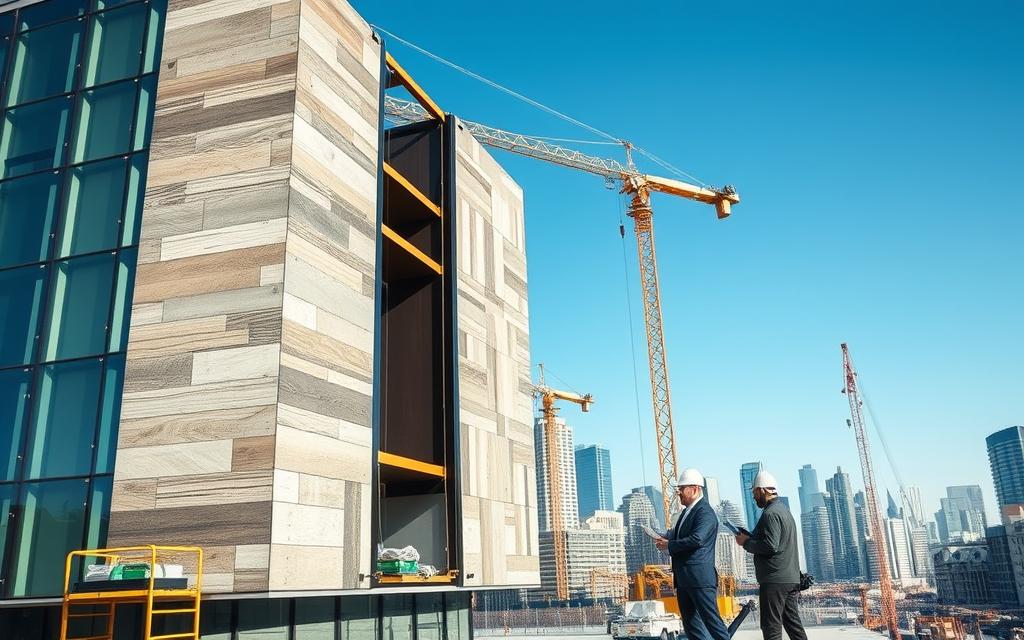
Modular Construction Practices
Modular construction is changing how we put facades together. It moves the main work to a factory, making things more precise. This way, we can be creative with designs without losing structural strength.
Efficiency is key in this change. Using standard parts made in a factory helps avoid weather and labour problems. This method ensures high-quality buildings right from the start.
Integration of Smart Technologies
Today’s buildings need more than just a simple outer layer. Smart technologies like automated shades and sensors are becoming common. These features let facades adjust to light and temperature changes all day.
These smart systems help buildings use less energy. By controlling light and heat, we cut down on costs for building owners. Adding these parts early on means they work well together for a long time.
Customisation and Aesthetic Appeal
Many think modular construction limits design. But, new ways of making mean we can have unique designs. We can make special facade panels that are both custom and cost-effective.
This mix of standard parts and aesthetic freedom is important for our cities. We can now have buildings that are both affordable and beautiful. Advanced digital tools help keep each project unique while using modern building methods.
Real-World Applications of Unitized Panel Systems
Our work in facade engineering shows that the move from factory to site is key. The unitized panel method changes how we build in the UK today.
Case Studies in the UK Construction Sector
Big projects in London use these systems to meet tight deadlines. For example, high-rise buildings use pre-assembled modules to keep the building weather-tight fast.
These examples show that unitized panel systems are more than a design choice. They are a must for success. By building in a factory, teams can keep quality high, even with British weather’s unpredictability.
Challenges Faced in Implementation
Despite their benefits, we face big challenges when installing. Site logistics are a major issue, mainly in busy city centres with little space for big machines.
Planning crane access for big facade sections is critical. If the delivery and lifting plans don’t match, projects can face expensive delays.
Lessons Learned from Real Projects
The best results come from working with the supply chain early. Early collaboration helps spot problems before panels arrive.
We’ve found that being flexible on site is key to solving unexpected issues. Treating unitized panel systems as high-tech components ensures they last in every construction project.
Key Considerations for Professionals
High-performance facade systems need a good mix of offsite manufacturing and onsite work. Early decisions in the procurement phase are key to success. A strategic approach helps avoid risks and ensures top quality installation.
Selecting the Right Materials and Suppliers
Finding the right partners is essential for a building’s long life and performance. We look for suppliers with a history of quality and durability. Transparency in the supply chain is important to ensure ethical sourcing and compliance with standards.
We check suppliers’ technical skills and support during design. It’s important to test materials for compatibility. This careful selection avoids delays and ensures the facade works well in different weather.
Compliance with UK Building Regulations
Understanding UK building rules is a must for us. We make sure every facade meets fire safety standards, like using non-combustible materials in tall buildings. Following Approved Document B is key to keeping people safe and meeting the law.
We also focus on thermal performance to meet Part L. Choosing systems with good insulation helps the building’s energy use. We do regular checks and tests to keep our designs up to standard.
Managing Site Logistics and Installation
Managing offsite manufacturing needs careful timing for panel delivery. We use advanced tools to match factory output with site progress. This approach reduces storage needs and damage risks.
Good installation needs clear communication between the factory and site teams. We visit sites often to check the installation process. The table below shows the main factors we consider for these complex tasks.
| Strategy Factor | Offsite Manufacturing | Onsite Installation | Risk Mitigation |
|---|---|---|---|
| Lead Times | Fixed and predictable | Dependent on structure | Early procurement |
| Quality Control | High (Factory controlled) | Variable (Site conditions) | Rigorous inspections |
| Logistics | Just-in-time delivery | Crane and labour access | Detailed site planning |
| Compliance | Certified components | Verified assembly | Documented testing |
Conclusion and Practical Takeaways
Modern building envelopes need a new approach to design and delivery. We see a move towards precision-engineered systems that focus on performance and speed. This change helps project teams meet today’s architecture demands.
Core Strategic Insights
Success in this sector comes from early teamwork between architects and manufacturers. We advise project leads to include technical expertise from the start. This ensures all parts meet strict safety and thermal standards.
Recommendations for Success
Choosing modular construction can cut waste and boost site safety. We recommend firms invest in training for these methods. Also, focusing on Innovation in your procurement strategy keeps you ahead in the UK market.
The Path Ahead
Digital tools will keep improving how we plan and do complex facade projects. We expect future developments to focus on the circular economy and cutting carbon. Keeping up with these changes is key for anyone working in the built environment.