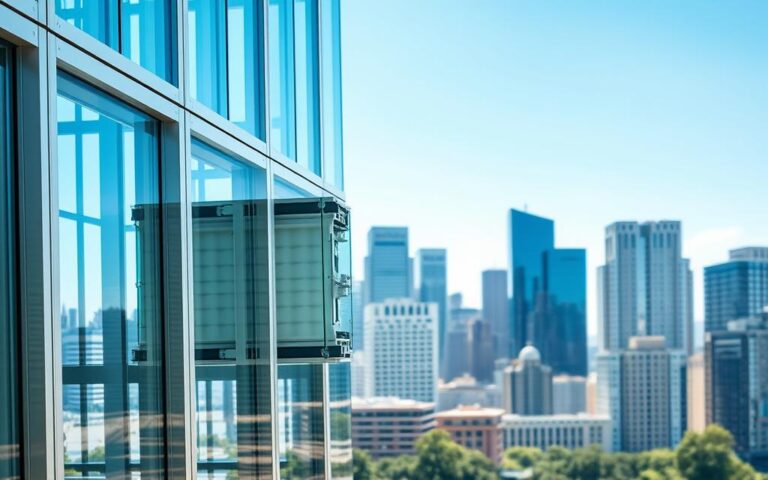
Modern architecture relies on high-performance building envelopes to protect and define our urban landscape. Choosing the right exterior system is a critical decision for project managers aiming to balance design goals with practical constraints.
A standard Curtain Wall often defines the sleek aesthetic of a modern skyscraper. You might choose a traditional Stick Facade for its flexibility when working on complex or unique building geometries.
Alternatively, a pre-assembled Unitized Panel offers impressive speed and efficiency during the installation phase. This choice impacts your overall project timeline and budget significantly, making it a vital topic for stakeholders.
Understanding these fundamental differences helps you build smarter and more efficiently. We will examine how these approaches influence your construction site logistics and long-term building performance. Let’s explore which method fits your next commercial project best.
Key Takeaways
- Selecting the right exterior system is essential for meeting strict project deadlines.
- A traditional approach offers high design flexibility for custom building shapes.
- Pre-assembled systems significantly reduce on-site labor and installation time.
- Budget planning must account for both material costs and labor efficiency.
- Understanding technical differences ensures better performance for your commercial structure.
Understanding Curtain Walls and Their Types
A curtain wall acts as the protective skin of a building, shielding it from harsh environmental elements while defining its unique character. Unlike traditional load-bearing walls, these systems do not carry the weight of the structure itself. Instead, they hang from the building frame like a curtain, providing a lightweight and efficient exterior solution.
What is a Curtain Wall?
At its core, this technology is a non-structural outer covering designed to keep weather out and occupants comfortable. These facade systems are typically made of lightweight materials, such as aluminum frames and glass infills. Because they are not load-bearing, they allow architects to create expansive, transparent designs that flood interiors with natural light.
The primary functions of these systems include:
- Weather resistance: Preventing air and water infiltration.
- Thermal insulation: Managing heat transfer to improve energy efficiency.
- Structural movement: Accommodating building sway and thermal expansion.
Importance of Curtain Walls in Modern Architecture
In the United States, the demand for high-performance buildings has pushed these systems to the forefront of design. Modern architects rely on them to meet strict energy codes while achieving a sleek, contemporary aesthetic. By integrating advanced glazing technologies, these facades significantly reduce the carbon footprint of commercial complexes.
“The building envelope is the most critical component in determining the long-term energy performance and comfort of a skyscraper.”
Beyond energy savings, these facade systems offer unparalleled design flexibility. Whether a project requires a curved glass profile or a complex geometric pattern, a curtain wall provides the necessary versatility. As urban density increases, the ability to build taller, lighter, and more efficient structures remains a top priority for developers across the country.
The Unitized Curtain Wall System
The unitized curtain wall system transforms how we build skyscrapers by moving assembly off-site. Instead of building the exterior piece by piece on the job site, manufacturers create large, finished sections in a controlled factory environment.
Overview of Unitized Curtain Walls
Each Unitized Panel is fully assembled before it ever reaches the construction site. These panels typically span the height of one floor and include the glass, insulation, and framing members.
Once the factory completes the units, they are carefully shipped to the project location. This method ensures that every component fits together with extreme precision, reducing the risk of errors during the final installation phase.
Advantages of the Unitized System
Choosing a unitized facade offers significant benefits for large-scale projects. The primary advantage is the dramatic reduction in on-site labor requirements, which helps keep construction schedules on track.
Because the assembly happens indoors, the quality control is far superior to field-assembled systems. Workers can manage the Curtain Wall components in a climate-controlled space, away from the unpredictable weather conditions of a busy construction site.
| Feature | Unitized System | Traditional Method |
|---|---|---|
| Assembly Location | Controlled Factory | On-site |
| Installation Speed | Very Fast | Moderate |
| Quality Control | High/Consistent | Variable |
| Labor Needs | Low On-site | High On-site |
Common Applications
This sophisticated system is most frequently implemented in high-rise commercial buildings and luxury residential towers. Developers often prefer the unitized facade when the project timeline is tight and the building design requires a high level of architectural detail.
By utilizing a Unitized Panel approach, contractors can enclose a building envelope much faster than with other methods. This allows interior work to begin sooner, which is a critical factor for the success of massive urban developments.
The Stick Facade System
When you look at traditional construction methods, the stick curtain wall stands out as a reliable and flexible choice. This method involves assembling individual components directly on the building frame, allowing for a high degree of precision during the installation process.
Overview of Stick Facades
The stick facade is defined by its piece-by-piece assembly approach. Workers install vertical mullions and horizontal transoms onto the structural frame of the building before adding the glass or infill panels.
This hands-on technique provides exceptional control over the final appearance of the building envelope. Because every piece is handled individually, installers can make minor adjustments on-site to ensure a perfect fit.
Benefits of Stick Facades
One of the primary advantages of this system is its inherent flexibility. Architects often choose this method when they need to accommodate complex building geometries that do not follow a standard grid.
Furthermore, the stick curtain wall is highly cost-effective for smaller projects. Since it does not require the expensive mass production of large, pre-fabricated panels, it serves as an economical solution for unique architectural designs.
Where Stick Facades are Used
You will typically find this system in projects where design customization is a priority. It is the industry standard for low-rise buildings, storefronts, and structures with intricate, non-repetitive shapes.
The following table highlights the key characteristics of the stick facade approach compared to other common building methods:
| Feature | Stick-Built System | Primary Benefit |
|---|---|---|
| Assembly Location | On-site | High adaptability |
| Design Complexity | High | Custom geometry |
| Project Scale | Small to Medium | Cost-effective |
| Installation Speed | Moderate | Field adjustments |
Key Differences Between Unitized and Stick Systems
Comparing these two distinct approaches reveals how your choice affects labor, speed, and overall design freedom. While both systems serve the same purpose of protecting a building, their execution paths differ significantly. Understanding these nuances helps project teams align their goals with the right technical solution.
Installation Processes
The Unitized Panel system relies on a highly controlled factory environment. Because these units are pre-assembled, they arrive at the job site ready for immediate installation. This process significantly reduces the time workers spend hanging off the side of a building.
In contrast, the Stick Facade requires a more traditional, labor-intensive approach. Components are shipped as individual pieces and assembled directly on the building frame. This method demands more on-site coordination and often extends the overall construction schedule.
Cost Comparisons
Budgeting for these systems involves looking beyond the initial material price. A Unitized Panel often carries a higher upfront manufacturing cost due to the precision engineering required in the factory. However, the savings in on-site labor and reduced equipment rental time can often offset this initial investment.
The Stick Facade is frequently viewed as the more budget-friendly option for smaller or less complex projects. Since it uses standard components, it avoids the high costs of specialized factory production. Yet, project managers must account for potential delays caused by weather or site-specific labor challenges.
Aesthetic Flexibility
Architects often choose a specific system based on the desired visual profile of the building. The Stick Facade offers incredible versatility for complex geometries and unique building shapes. Because it is assembled piece by piece, it allows for easier adjustments during the installation phase.
While the Unitized Panel is often associated with uniform, sleek designs, modern manufacturing has increased its design potential. It remains the preferred choice for high-rise projects where a consistent, high-performance look is the primary goal. The following table summarizes these key operational differences:
| Feature | Unitized Panel | Stick Facade |
|---|---|---|
| Assembly Location | Off-site Factory | On-site Construction |
| Installation Speed | Very Fast | Moderate to Slow |
| Labor Requirements | Low On-site | High On-site |
| Design Complexity | Standardized | Highly Flexible |
Performance and Durability
Selecting the right exterior envelope is a vital decision for any long-term construction project. The longevity of your building depends on how well the chosen system handles environmental stress over several decades. Both the stick curtain wall and the unitized facade offer distinct advantages when it comes to standing up to the elements.
Energy Efficiency Considerations
Modern building codes require high levels of thermal performance to reduce energy consumption. Manufacturers achieve this by integrating advanced thermal breaks into the aluminum framing members. These breaks prevent heat transfer, ensuring that the interior climate remains stable regardless of external temperatures.
High-performance glazing is another essential component for energy efficiency. When paired with a unitized facade, the factory-sealed units provide superior insulation compared to field-assembled options. This precision manufacturing minimizes gaps that often lead to energy loss in less controlled environments.
Weather Resistance Traits
Protecting a structure from water infiltration and air leakage is the primary goal of any facade system. A stick curtain wall relies heavily on the skill of on-site installers to ensure every seal and gasket is perfectly placed. Because these components are assembled piece-by-piece, the quality of the final installation is paramount to preventing leaks.
In contrast, factory-controlled environments allow for rigorous testing of every unit before it reaches the job site. This process ensures that the weather-stripping and drainage paths function exactly as designed. Consistent quality control significantly reduces the risk of long-term maintenance issues caused by moisture penetration.
| Performance Metric | Stick Curtain Wall | Unitized Facade |
|---|---|---|
| Thermal Insulation | Moderate to High | Excellent |
| Air/Water Sealing | Dependent on Labor | Factory-Verified |
| Installation Speed | Slower | Rapid |
| Durability | High (if installed well) | Very High |
Maintenance Requirements
Whether you manage a high-rise or a commercial office, maintenance is the backbone of long-term structural integrity. A proactive approach to building care prevents costly repairs and ensures that your exterior envelope continues to perform at its peak. By identifying potential issues early, you protect your investment and maintain the safety of everyone inside.
“An ounce of prevention is worth a pound of cure, especially when it comes to the complex systems that shield our buildings from the elements.”
Maintenance for Unitized Curtain Walls
A unitized facade is engineered in a controlled factory environment, which generally leads to higher precision. Because these units arrive on-site fully assembled, your primary focus should be on the integrity of the factory-sealed joints and gaskets. Regular inspections are vital to ensure that these seals remain airtight and watertight against harsh weather conditions.
Technicians should prioritize checking for any signs of gasket shrinkage or degradation. If a seal appears compromised, it is essential to address the issue immediately to prevent moisture infiltration. Keeping these factory-made connections in good condition is the best way to extend the life of your building envelope.
Maintenance for Stick Facades
In contrast, a stick curtain wall requires a more hands-on approach due to its field-assembled nature. Since these components are put together on-site, the quality of the installation depends heavily on the precision of the field-applied seals. You must schedule routine check-ups to inspect these joints for any gaps or cracks that may have developed over time.
It is also important to monitor the individual component connections, such as anchors and fasteners, to ensure they remain secure. Because these systems are exposed to thermal expansion and contraction, proactive monitoring helps identify movement that could stress the seals. By staying diligent with your inspection schedule, you ensure that your building remains protected and energy-efficient for years to come.
Selecting the Right System for Your Project
Selecting the ideal system for your building involves balancing many moving parts. Because every construction project is unique, you must carefully evaluate your specific constraints to ensure the best outcome. Choosing between various facade systems requires a deep look at your budget, timeline, and overall design complexity.
Factors to Consider
Before finalizing your choice, you should assess the physical and logistical realities of your job site. Site access is a primary concern, as some methods require heavy machinery that may not fit in tight urban spaces. You must also consider the availability of local labor, as specialized installation teams are not always accessible in every region.
Your project schedule plays a vital role in determining which approach is most efficient. If you are working under a strict deadline, you might prioritize options that allow for faster installation. Evaluating these facade systems early helps prevent costly delays and keeps your construction timeline on track.
- Budget Constraints: Compare the total installed cost rather than just material prices.
- Design Complexity: Determine if your vision requires custom shapes or standard modular components.
- Local Climate: Ensure the chosen materials can withstand regional weather patterns over time.
Questions to Ask Your Architect
Engaging in a productive dialogue with your design team is the best way to ensure your goals are met. You should feel empowered to ask direct questions that clarify why they recommend specific facade systems for your building. A transparent conversation will help you feel confident in your final decision.
Consider asking the following questions during your next planning meeting:
- How does this choice impact the long-term maintenance costs of the building?
- What are the specific energy efficiency benefits of this system for our local climate?
- Can you provide examples of similar projects where this approach was successful?
- How does this system accommodate potential future repairs or panel replacements?
By asking these strategic questions, you ensure that your architect aligns their technical expertise with your long-term vision. Clear communication is the foundation of a successful project that stands the test of time.
Case Studies: Successful Implementations
Case studies bridge the gap between architectural theory and the reality of the job site. By reviewing these projects, you can see how specific design challenges were met using modern engineering. These examples highlight how the right choice impacts both the construction timeline and the long-term performance of a building.
Unitized Curtain Wall Examples
The Unitized Panel system is often the preferred choice for massive high-rise projects where time is a critical factor. A prime example is the Salesforce Tower in San Francisco. The construction team utilized pre-assembled units to ensure rapid enclosure of the building.
This approach allowed the crew to install the exterior skin from the inside of the building. By avoiding the need for external scaffolding, the project reached completion much faster than traditional methods. The precision of the factory-made components ensured a tight seal against the coastal winds.
- Speed: Significant reduction in on-site labor hours.
- Quality: Controlled factory environments minimize defects.
- Safety: Reduced risk for workers by limiting exterior exposure.
Stick Facade Success Stories
While high-rises favor modular systems, the Stick Facade remains a champion for complex, low-rise, or custom-shaped structures. Many boutique office buildings and museums rely on this method for its incredible design flexibility. It allows architects to adjust the frame on-site to accommodate unique geometric shapes.
One notable success story involves a mid-sized cultural center that required intricate glass angles. Because the Stick Facade components are assembled piece by piece, the installers could make minor adjustments to fit the custom steel frame perfectly. This level of adaptability is difficult to achieve with pre-manufactured panels.
Ultimately, these projects demonstrate that the best system depends on the specific needs of the site. Whether you prioritize the speed of a Unitized Panel or the creative freedom of a stick system, real-world results prove that both methods deliver excellent performance when applied correctly.
Conclusion and Final Thoughts
Choosing the right approach for your building envelope requires a clear understanding of your project goals. Balancing budget constraints with long-term performance remains the most vital step in your planning process. Every Curtain Wall selection influences the overall success of your structure.
Strategic Decision Making
Evaluate your site logistics and timeline to determine if a unitized or stick system fits your needs. High-rise projects often benefit from the speed of unitized panels. Smaller or more complex designs might find better value in the adaptability of stick facade systems. Your choice dictates the efficiency and aesthetic impact of the finished exterior.
Innovations Shaping the Future
The industry continues to evolve with exciting new technologies. Smart glass integration now allows buildings to adjust tint based on sunlight intensity. Sustainable materials are becoming standard in modern facade systems to reduce carbon footprints. These advancements ensure that your Curtain Wall remains relevant and energy-efficient for decades. Reach out to your project team today to discuss how these trends can elevate your next build.